
Airmobile Operations
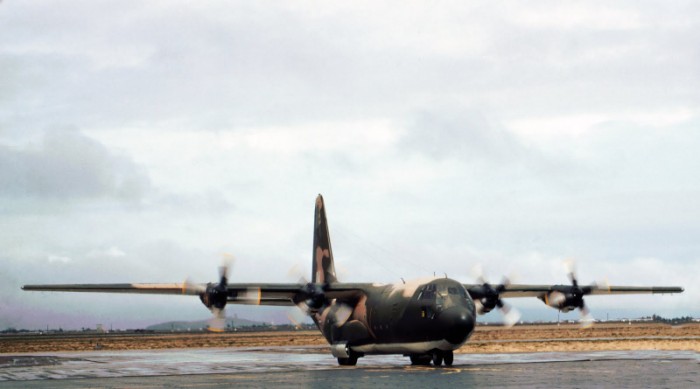
As a consequence of these unique airmobile capabilities, the 1st Cavalry Division was the fire brigade for the northern region and we moved frequently to different areas to combat large-scale enemy units who were attacking friendly weak spots. During our tour in Vietnam, Bravo Company deployed to the following areas to combat large-scale enemy units: Song Re Valley, Tua Hoa, Dak To, Quang Tri, relief of Marine base at Khe Sanh and A Shau Valley. When we deployed to threatened areas several hundred kilometers away from our base area, we were transported on C-130 Hercules aircraft to the closest airfield.
 Thanks to Tom Beach & Jim Beck
The C-130 Hercules has a long reputation
as the workhorse for delivering troops, equipment and supplies. One C-130
was required to airlift the combat troopers of Bravo Company and as these
Hercules were not equipped with seats, it was a tight squeeze to sit over
120 troopers with their packs and weapons on the floor. On landing at our
destination, we usually moved to helicopters on the airstrip and conducted a
combat assault in our new area of operations.
Bravo
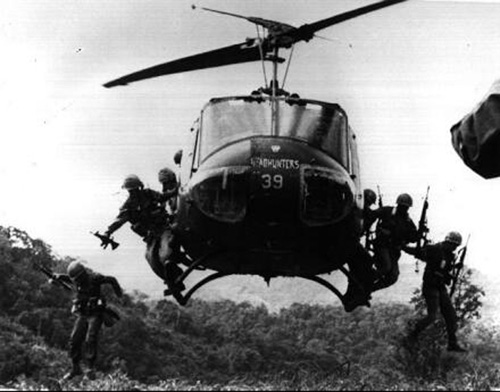
Company conducted numerous combat air assaults and we had a high-level of
proficiency in all aspects of airmobile operations. We made extensive use of
variations of
four
different types of helicopters - the Huey (UH-1), the Chinook (CH-47), the
Cobra (AH-1) gunship and light observation helicopters.
The Huey was the multipurpose workhorse of
the helicopter fleet. It was used for air assault, to transport personnel
and material, for medical evacuation, for command and control, and as gun
ships. This versatile helicopter could accommodate up to 12 troops, 6
stretchers for medical evacuation, or transport cargo internally or by a
sling. All of the Hueys we used were armed with two M-60 door guns. Each
Huey had a crew of four, two pilots and two door gunners.
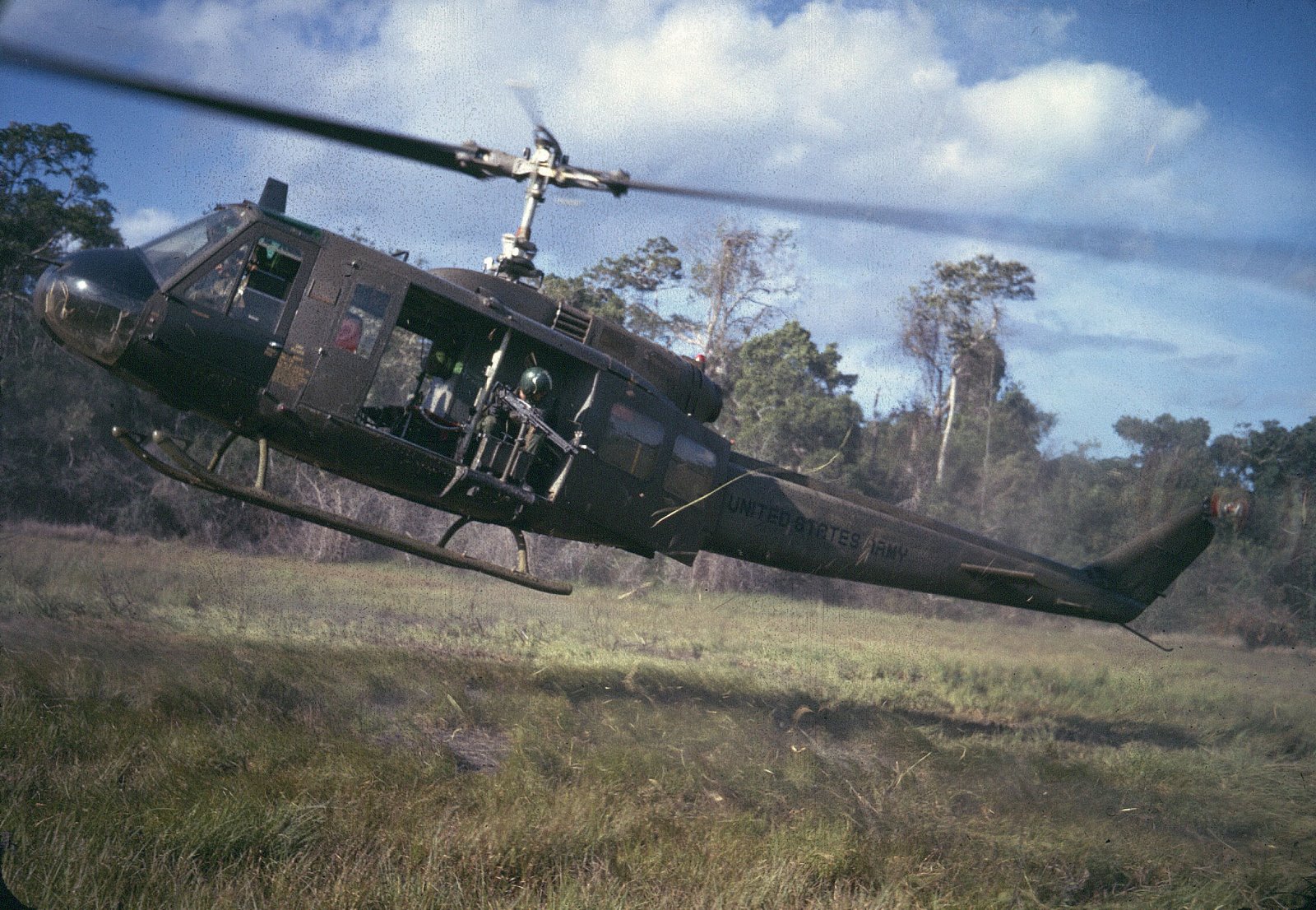 Thanks to Fred Fish
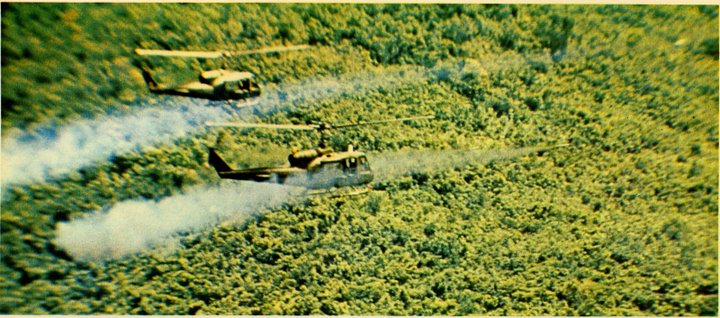 Huey Gunship UH-1D
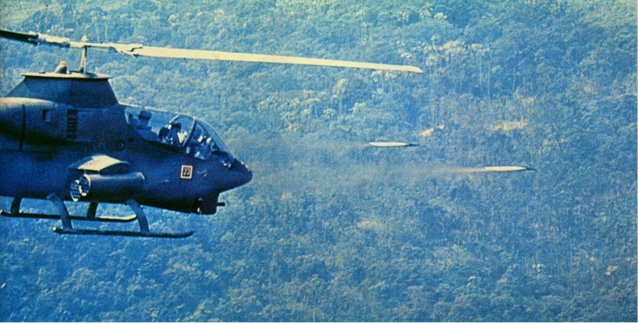 Cobra Gunship AH-1G
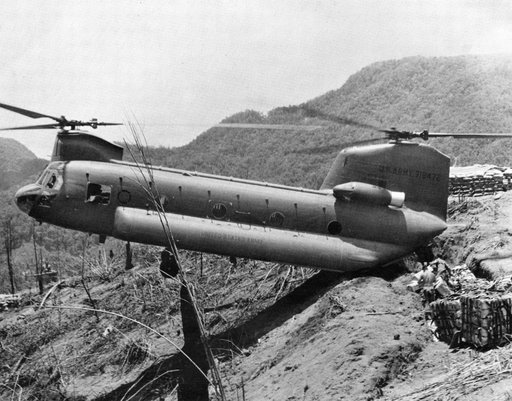 CH-47B Chinook
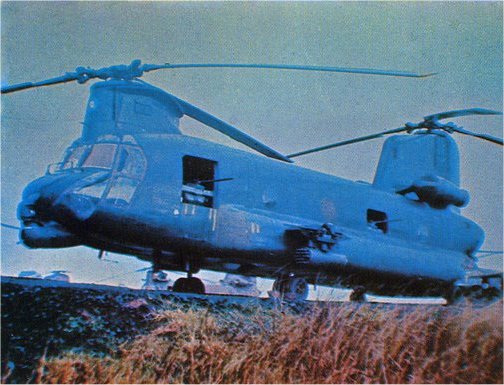 ACH-47A Chinook or “Guns-A-Go-Go”
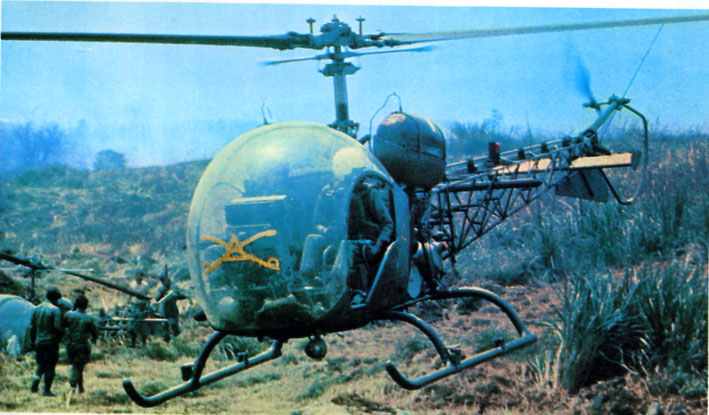 OH-13 Light Observation Helicopter
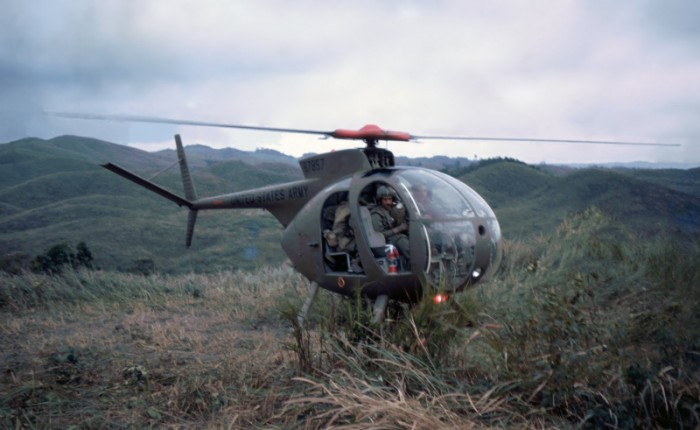 OH6 Cayuse Light Observation Helicopter
Thanks to Tom Beach
OH6 Cayuse Light Observation Helicopter
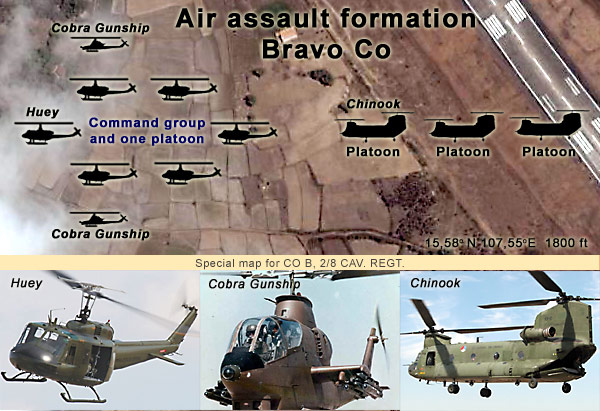
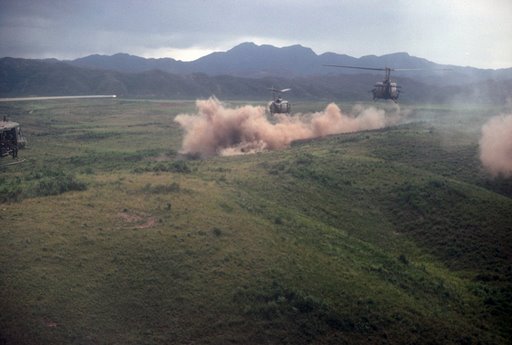
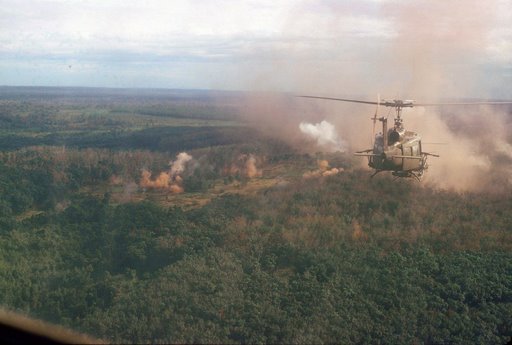
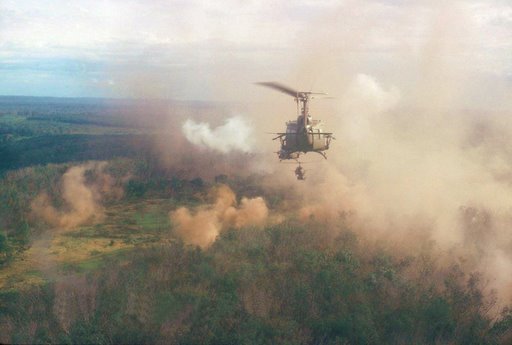
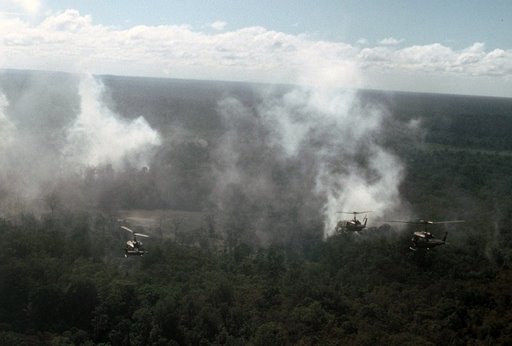
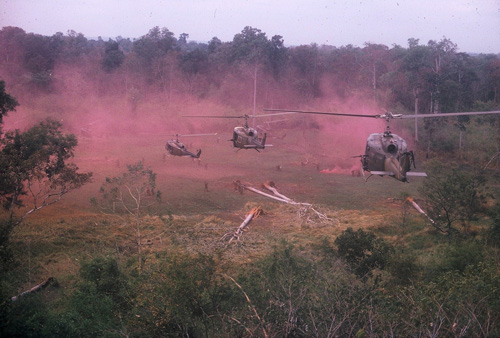
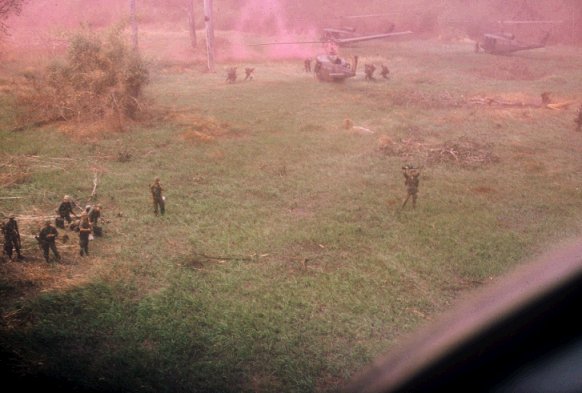
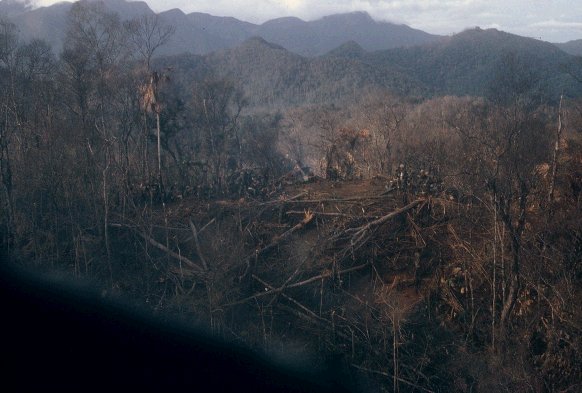
Thanks to Tom BeachA typical combat air assault for Bravo Company required 5-6 Hueys, 3 Chinooks and 2 Cobra gunships. The Battalion Commander and his Operations Officer planned and conducted these airmobile operations, to include preparatory artillery fires, and they controlled the actual combat assault from a Huey Command and Control helicopter equipped with special radio consoles. With the exception of populated areas, the landing zone (LZ) and surrounding area was subjected to several barrages of artillery to destroy any enemy forces, activate any booby traps, and seal off the LZ. This employment of artillery was a lesson learned from the 1st Cavalry Division’s experience in the Battle of Ia Drang in late 1965 (shown in the movie “We Were Soldiers Once”), when the 1st Battalion, 7th Cavalry air assaulted into Landing Zone X-Ray occupied by enemy forces. The last round of the preparation artillery barrage impacted only minutes before the touchdown of the Huey formation.
 Thanks to Sven Gerlith
Shown below are six hueys approaching the landing zone on a combat assault operation. The dark smoke shows where the preparatory artillery shells have impacted on and around the landing zone to suppress enemy forces and seal off the area. The white smoke is from a white phosphorous shell (Willie Pete), signaling the last round of the artillery preparation on the landing zone and that it is now clear to complete the combat assault.
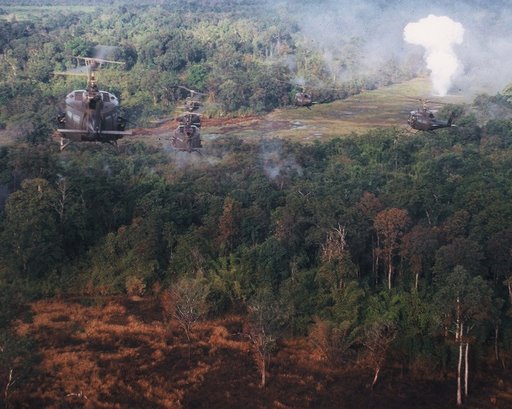 Thanks to Robert Griffin
FINAL APPROACH FOR COMBAT ASSAULT
Thanks to Robert Griffin
FINAL APPROACH FOR COMBAT ASSAULT
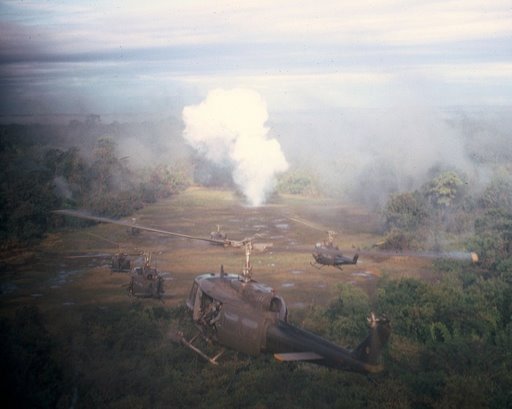 Thanks to Robert Griffin
SHORTLY BEFORE TOUCHDOWN
Thanks to Robert Griffin
SHORTLY BEFORE TOUCHDOWN
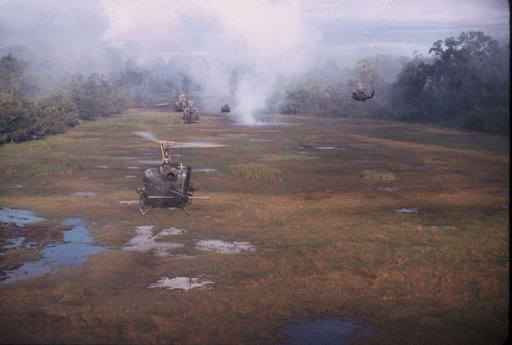 Thanks to Robert Griffin
INBOUND FOR COMBAT ASSAULT
Thanks to Robert Griffin
INBOUND FOR COMBAT ASSAULT
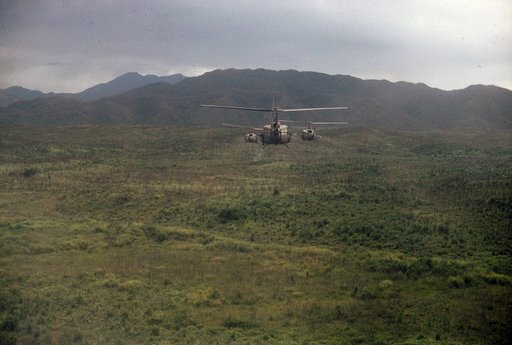 Thanks to Robert Griffin
FINAL
APPROACH TO LANDING ZONE
Thanks to Robert Griffin
FINAL
APPROACH TO LANDING ZONE
 Thanks to Robert Griffin
COMBAT ASSAULT
Thanks to Robert Griffin
COMBAT ASSAULT
 Thanks to Robert Griffin
FINAL APPROACH TO LANDING ZONE
Thanks to Robert Griffin
FINAL APPROACH TO LANDING ZONE
 Thanks to Robert Griffin
FINAL APPROACH TO LANDING ZONE
Thanks to Robert Griffin
FINAL APPROACH TO LANDING ZONE
 Thanks to Robert Griffin
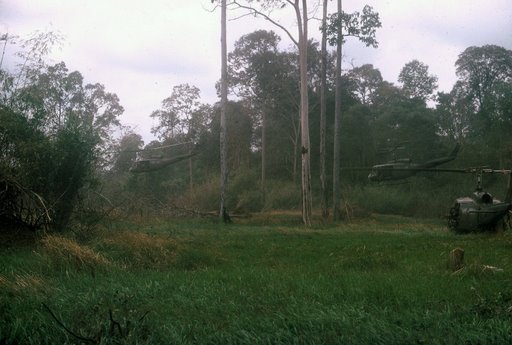
Flying between trees required exceptional pilot skills.
COMBAT ASSAULT/EXTRACTION OPERATIONS
 Thanks to Robert Griffin
 Thanks to Robert Griffin
 Thanks to Robert Griffin
 Thanks to Robert Griffin